

2025-10-25
【XR DREAMLAND】XR NEXT – Industry Pioneer Talks#1|Trends in Walkable LBE Business Models
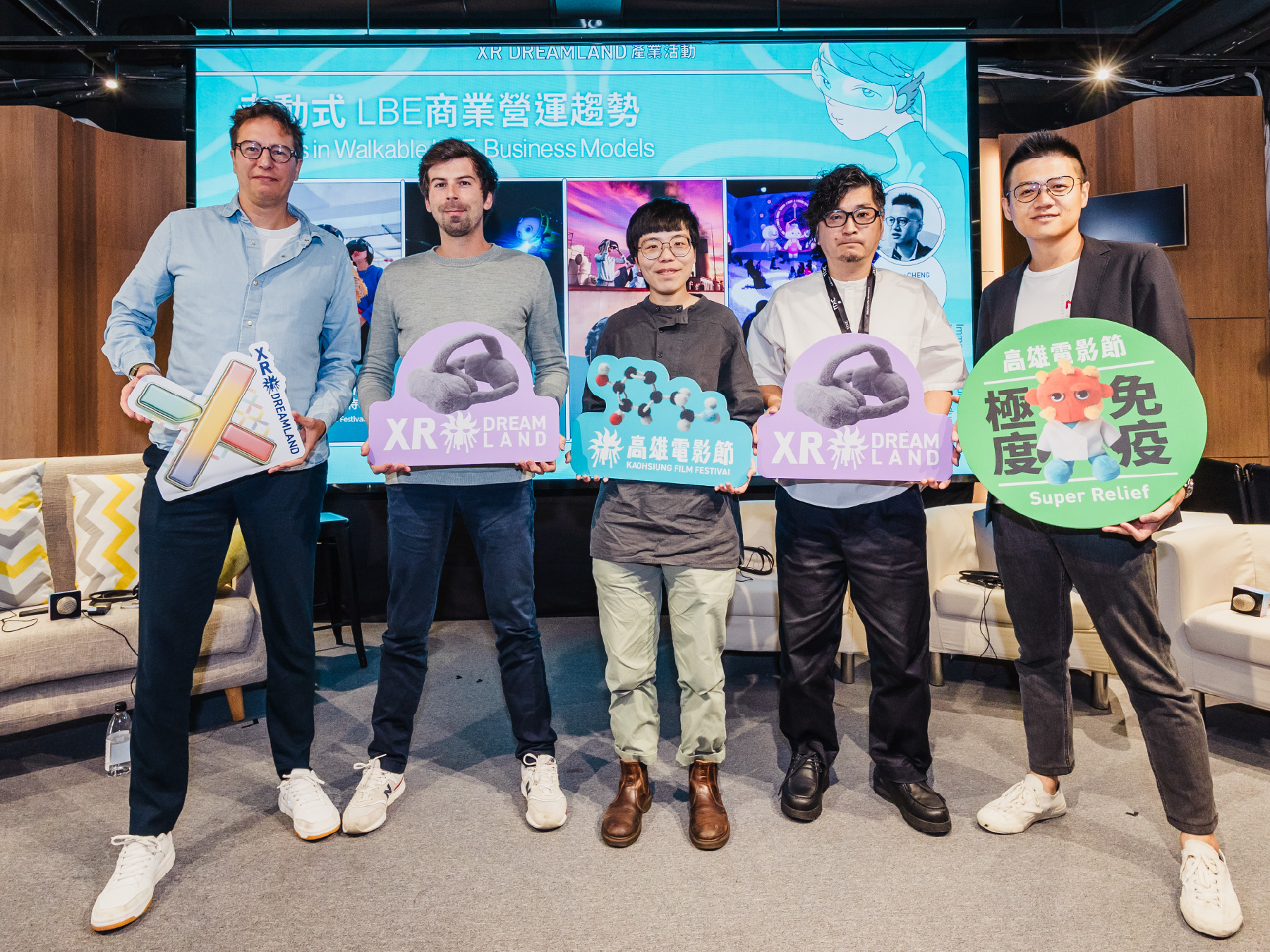
【XR DREAMLAND】XR NEXT – Industry Pioneer Talks#1|Trends in Walkable LBE Business Models
Opening Remarks
Jimmy CHENG Vice President of Operations, Digital Domain Holdings Limited
In recent years, walkable LBE (Location-Based Entertainment) experiences have developed rapidly, with new venues opening across the globe. This forum, moderated by Jimmy CHENG, Vice President of Operations at Digital Domain Holdings Limited, invited professionals from different roles in the XR industry to share their insights. The panelists included Katsutoshi MACHIBA, Executive Producer at Immersive Journey, Antoine LIEUTAUD, Co-founder and CEO of Eclipso, Vincent GUTTMANN, Producer and Studio Manager at Small Creative, and Ami WU, CEO of Moondream Reality. The session began with each speaker sharing the goals and strategies of their respective companies.
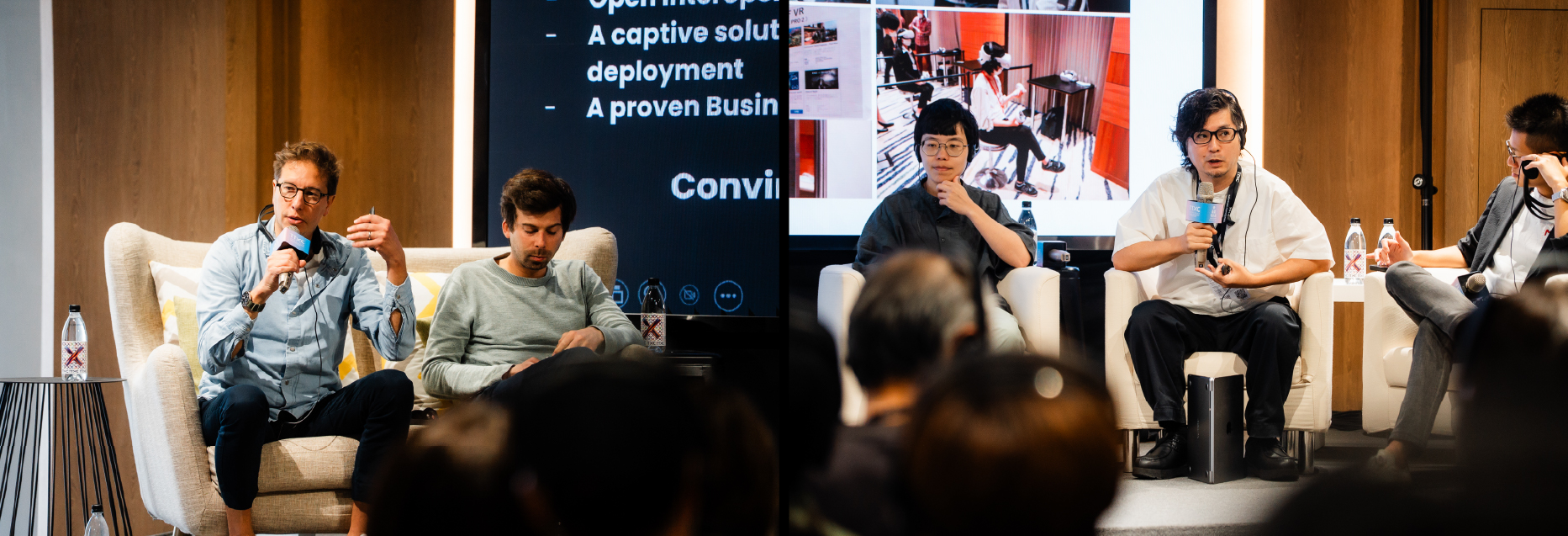
Panelists
Katsutoshi MACHIBA Executive Producer, Immersive Journey
MACHIBA is also the CEO of CinemaLeap, a studio that not only produces XR content but also brings outstanding international works to Japan and organizes the Beyond the Frame Festival. He noted that immersive experiences face significant operational challenges such as limited audience capacity, high costs, and pricing difficulties. Striking a balance between narrative depth and commercial viability remains a major hurdle. He shared that after bringing the acclaimed experience Horizon of Khufu to Japan, Immersive Journey successfully established an operational model. The studio now plans to develop original Japanese XR content with a view toward the global market.
Panelists
Ami WU CEO, Moondream Reality
WU shared insights from Moondream Reality, an immersive venue based in Kaohsiung that has staged various MR productions and participated in the creation of Sosowon: The Season of the Flying Fish, featured in this year’s Kaohsiung Film Festival. The company takes a user-centric approach, experimenting with different types of content and technologies to identify what resonates with audiences. She believes that Taiwan is just beginning to enter the era of large-scale walkable LBE works. Given that Taiwanese audiences often attend events as families or groups, she sees strong potential for the mainstream adoption of LBE experiences.
Panelists
Antoine LIEUTAUD Co-founder and CEO, Eclipso
Eclipso focuses on providing high-quality cultural and entertainment experiences targeted at families and groups of friends. The company adopts a premium pricing strategy to maintain profitability. LIEUTAUD emphasized that finding well-located venues with favorable cost-to-benefit ratios is challenging. Eclipso concentrates on maintaining steady visitor traffic, using online reservations to offset geographical disadvantage, while developing distinctive marketing strategies that have resulted in a stable business model.
Panelists
Vincent GUTTMANN Producer & Studio Manager, Small Creative
GUTTMANN introduced the “OnSite Platform,” developed by Small Creative to support modular, scalable walkable experiences that can be deployed across various venues. Built with a cell-based structure that is easy to assemble and disassemble, the platform includes a curated catalog of works, efficient flow control systems, and streamlined visitor management, allowing for global expansion.

Q&A Highlights
CHENG observed that large-scale walkable LBE experiences have become common in Europe and North America, while in Taiwan, similar developments have only emerged in the past two years, largely thanks to government funding. In comparison, the Chinese market has already entered a stage of intense competition.
GUTTMANN commented that France has a long-established LBE ecosystem, and the influx of new creators is pushing content innovation. LIEUTAUD added that many in France still associate VR with “video games,” and that immersive works can only be fully understood through firsthand experience. He also pointed out that while China has high production output, the market suffers from price-cutting and declining quality. In contrast, Eclipso collaborates only with top-tier content creators, allowing them to maintain higher price points.
WU noted that Taiwan lacks a healthy creative environment. Production timelines are short, leaving little room for in-depth research or trial and error. Additionally, the limited market size makes industry sustainability difficult. She recommended building stronger international connections to stay aligned with global trends and attract investment and corporate support.
On the topic of Japan’s unique consumer habits and why LBE has gained traction there, MACHIBA emphasized the importance of word-of-mouth. He prioritizes fan engagement and communication in marketing. XR has begun to attract attention from both businesses and public institutions in Japan, signaling an emerging industry that must maintain high-quality standards to thrive.
Crossing Borders: Content and Cultural Context
What kind of content can reach across countries and cultures, and what remains specific to certain regions? LIEUTAUD observed that American audiences prefer entertainment-driven experiences, while French audiences tend toward artistic exhibitions, resulting in different market responses. GUTTMANN stressed the importance of diverse themes and local cultural integration but acknowledged that topics popular in Europe may not resonate globally.
WU identified three strong content drivers: well-known IPs, adult content, and supernatural themes. However, she also emphasized that promoting Taiwanese culture and collective memory remains a key mission.
From a distribution perspective, MACHIBA highlighted the need for instantly understandable themes and appealing titles that can grab attention. Still, the content quality must exceed expectations set by the title. As a producer, he continues to explore how to create works rooted in Japanese culture that also appeal to global audiences.
Technology and Operations
In terms of operational strategy, LIEUTAUD underscored the importance of securing prime locations at affordable costs. He and GUTTMANN both praised Small Creative’s modular platform, noting that the flexible cell design can be applied in a wide range of venues.
MACHIBA echoed that location is a key factor and emphasized the importance of assessing market demand. Taking Immersive Journey in Yokohama as an example, he noted that local residents are willing to travel and pay for quality experiences. The venue also prioritizes excellent customer service to encourage repeat visits.
WU concluded by stating that commercial operations are essentially mathematical. During the initial planning phase of a venue, modular thinking must be applied, ensuring that both technical and creative aspects align with operational requirements.